
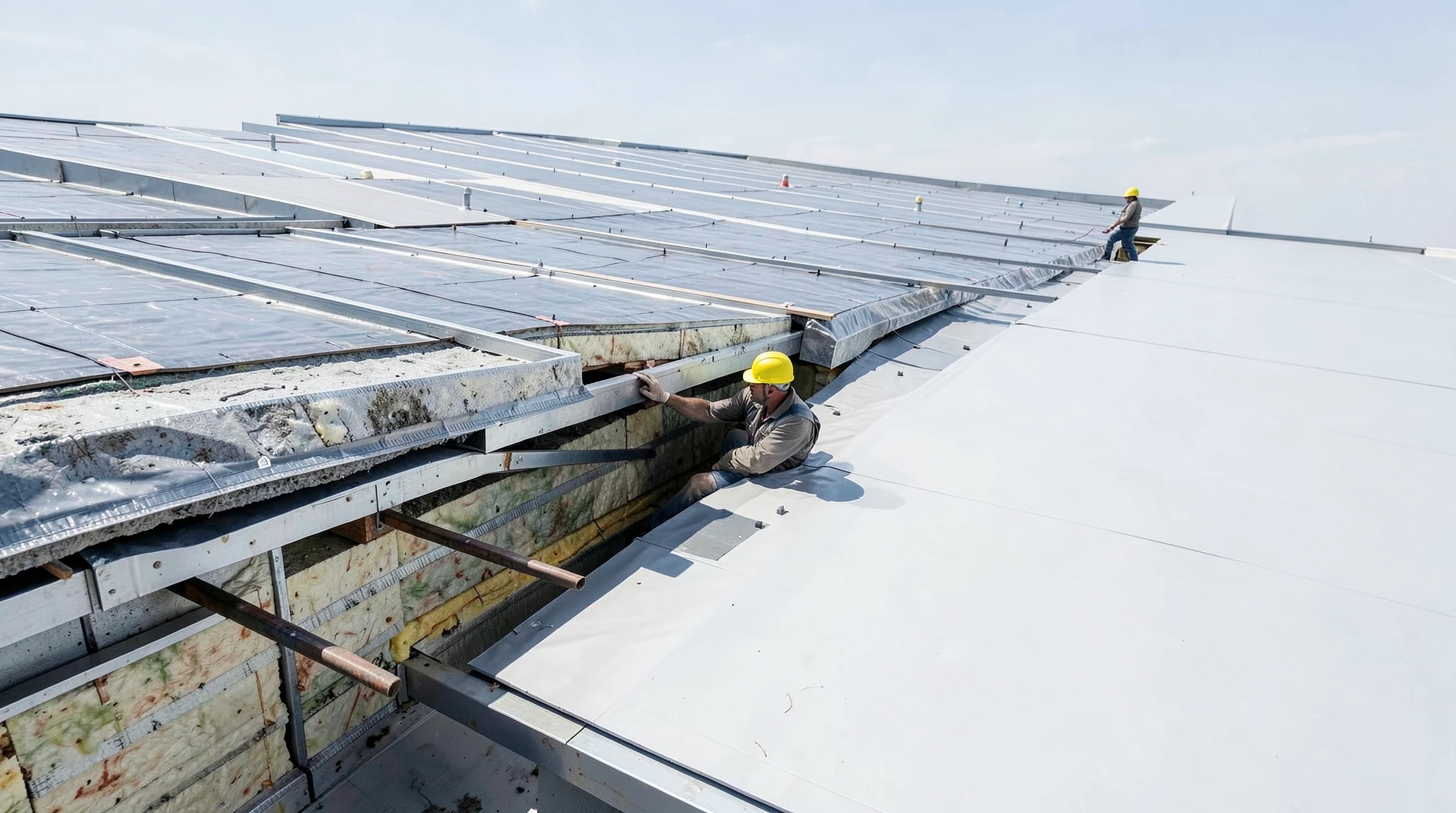
When you are faced with a large, industrial-scale roofing project, the thought of budgeting can feel overwhelming. Unlike replacing residential shingles, which often involves straightforward material cost estimates, flat commercial roofing is an intricate system-a complex marriage of membranes, insulation, drainage, and structural integrity. If you've ever searched for how do I estimate the cost for industrial flat roofing installation?, you likely found dozens of conflicting online figures that feel too good to be true.
The immediate takeaway we need to share is this: a single number or a simple material list will almost certainly give you an inaccurate picture. Roofing, especially commercial flat roofing, is less about simply buying materials and more about meticulous preparation and system integration. As someone who has spent my career dealing with the kinds of weather extremes this part of North Dallas sees-from intense sun to massive hailstorms-I’ve learned that the greatest cost savings come from proactive maintenance, not reactive emergency fixes after a major storm hits. Understanding your budget requires looking past the visible roof surface and into the structure beneath it.
Understanding the Hidden Variables: Why Flat Roofing Costs Are Never Simple
To truly estimate the costs associated with industrial flat roofing installation, you must first adjust your mindset away from thinking about "material cost." Think of a commercial roof as the protective skin over a highly specialized machine; if any one component is compromised-the flashing, the insulation, or the underlying decking-the whole system fails. This complexity is why simply comparing TPO vs modified bitumen pricing without considering prep work is financially irresponsible.
A reputable quote must itemize costs across three distinct pillars: Materials, Labor, and Ancillary Costs. The most crucial pillar, however, is often the one that gets overlooked entirely during initial estimates: structural preparation. This includes assessing decades of grime buildup, identifying any areas where the concrete decking has cracked or settled, and remediating moisture intrusion points. These underlying issues are expensive to ignore but are critical for achieving true longevity.
When we deal with commercial properties in neighborhoods like Oak Lawn or Knox-Henderson, we frequently encounter buildings built several decades ago. These structures often have foundational weaknesses that weren't visible until the original roofing material failed. For instance, I recall a site assessment on a multi-story building where the decking had suffered from years of trapped moisture and minor leaks-the roofer would say the roof needed replacing, but we found the real problem was localized structural rot in the concrete below. Addressing that underlying issue added thousands to the budget, but it guaranteed the new membrane wouldn't fail prematurely.
The Core Investment: Selecting Your Flat Roofing System and Materials
The materials themselves are highly specialized and dictate much of the cost breakdown. There isn't one "best" material; there is only the best match for your building’s environment, usage, and aesthetic needs.
Comparing Industrial Membranes: TPO vs Modified Bitumen
When discussing flat commercial roof cost breakdown, two materials dominate the market: TPO (Thermoplastic Polyolefin) and Modified Bitumen. Understanding their core differences is key to accurate budgeting.
- TPO: This material is known for its exceptional UV resistance, making it a fantastic choice in warm climates like ours where intense sun exposure can degrade other membranes quickly. It has excellent reflectivity, helping keep the building cooler and reducing long-term energy costs.
- Modified Bitumen (Mod-Built): This material offers great versatility and is often used for its ability to be integrated with various substrates.
The choice between them isn't just about price; it’s a calculation involving lifespan, maintenance frequency, and the building’s exposure profile. A simple lower bid might be appealing, but if that bidder hasn't factored in the correct material for your local climate, you are simply deferring an inevitable, far more expensive failure down the line.
Insulation and Drainage: The Unsung Heroes
Insulation is not merely a suggestion; it is a required part of the system designed to prevent thermal bridging-the transfer of heat through the roof structure that can compromise both energy efficiency and membrane longevity. Furthermore, drainage requirements are arguably the most critical element in any flat commercial roof estimate. We must budget for internal drains (for large, open areas), perimeter channels, and ensuring that the structural slope is adequate across the entire footprint. A poorly designed drainage system-even with brand new materials-is often costlier to fix than the original membrane itself because it dictates where water will pool and compromise the underlying deck.
The Build Process: Labor, Preparation, and Deconstruction Scope
Many homeowners worry that labor costs are merely about how many workers show up for a few days. This couldn't be further from the truth. In flat commercial roofing, labor accounts for the majority of the true investment. The most critical (and often overlooked) cost is the tear-off, assessment, and structural remediation process.

The initial phase of work involves meticulously cleaning decades of accumulated grime, potential biological growth, and surface contaminants. This preparation ensures that any new membrane bonds correctly to a clean, stable substrate-a bond failure can ruin even the best materials. We also spend significant time repairing underlying decking damage or addressing flashing failures found during the inspection.
This brings us to a common objection: "I just noticed a small leak; why do I need a full replacement?" While patching a visible leak might seem like an immediate, cheap fix, it is fiscally irresponsible if the surrounding materials have been compromised by that same moisture intrusion. That water has likely affected the underlying decking or flashing in a radius far greater than the leak itself. For comprehensive assessments like this, understanding the nuances of local roofing services near you is key, as our approach, guided by years of experience and adherence to local building codes here in Far North Dallas, dictates that we treat leaks not as isolated problems, but as indicators of systemic failure.
Beyond the Membrane: Accounting for Structural and Site Logistics
When you are calculating how do I estimate the cost for industrial flat roofing installation?, your quote must look far beyond the TPO or modified bitumen sheets themselves. The surrounding infrastructure is notorious for being the weak link.
We need to budget specifically for flashings-these are essentially the roof’s little belts that seal around penetrations like HVAC units, vents, and parapet walls. They are notoriously failure-prone points and must be factored into every quote. Similarly, if the existing structure has compromised load-bearing elements due to water damage or age, we must factor in the cost of reinforcing the deck before any new material can safely proceed.
Furthermore, we have to account for site logistics and operational downtime. This includes costs associated with professional debris removal (dumpster rental), temporary waterproofing measures during construction, and ensuring minimal disruption to your daily operations-whether you run a small business in Deep Ellum or manage an office building near Downtown Carrollton. A truly comprehensive quote anticipates these peripheral needs, preventing that dreaded "sticker shock" when the job is nearly finished.
Putting It All Together: What Makes a Transparent Roofing Quote?
If you are trying to determine how do I estimate the cost for industrial flat roofing installation, remember that the process of getting a quote is just as important as the quote itself. You need an expert who provides a professional roofing site assessment checklist, not just a quick visual inspection from the ground.
A truly trustworthy and transparent proposal will have detailed line items covering:
- Structural Remediation: Costs for decking repair or reinforcement.
- Preparation/Tear-off: Detailed labor hours for removal, cleaning, and disposal fees.
- Materials: Itemized cost per square foot for the membrane, insulation, and flashing components.
- Ancillary Services: Waste removal, dumpster rental, and specialized equipment usage.
If any of these crucial elements are vague or absent from a proposed quote, treat it as a major red flag. Instead of asking, "How much does TPO cost?" you should ask, "What is the total cost to achieve twenty years of guaranteed performance and structural integrity in this specific Dallas climate?" Shifting your focus from price points to comprehensive value shifts the conversation from panic-buying to proactive investment planning.
We are committed to providing that level of transparency-the kind of local knowledge needed to protect the architectural value of properties across Far North Dallas. Our goal is not simply to replace a roof, but to restore and enhance your property's long-term asset protection. When you work with experienced local experts like us, you gain more than just a contractor; you gain a neighborly partner committed to meticulous quality from assessment through final cleanup at +1 469-589-3827.