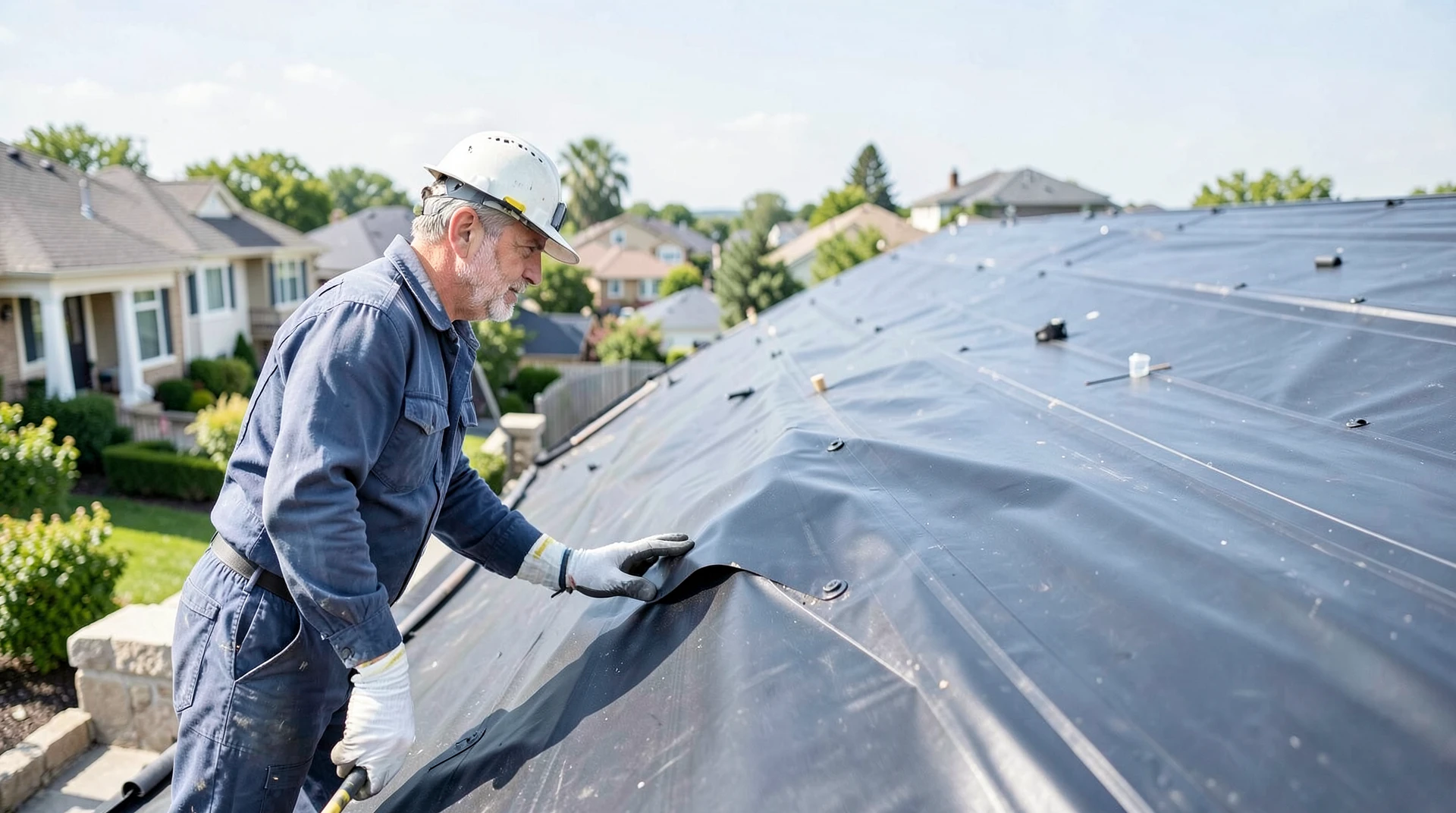
If you live in an established, beautiful neighborhood like Oak Lawn or Knox-Henderson, your home’s integrity is everything-from curb appeal to structural soundness. Many homeowners assume that if they can't see a leak, there isn't one. But roofing issues are often invisible until it's too late; minor micro-fractures and gradual material degradation allow water entry points that lead to mold, rot, and expensive internal damage. This is where specialized roof coatings come in. We find the hidden leaks and stop structural issues before they even start. Understanding the science of these systems-particularly the ideal temperature range for applying silicon roof coating-is crucial because this process isn't simply painting over a problem; it’s a sophisticated chemical restoration that requires precise environmental conditions to cure correctly.
Beyond Replacement: When is a Protective Roof Coating the Smarter Investment?
We often hear from homeowners who are faced with a decision between an expensive full roof replacement and some kind of sealant application. It can feel overwhelming, making you worry about whether you’re simply getting a "temporary patch." I want to reassure you that when done correctly by experienced professionals, these coatings offer true restoration-and they save significant money.
The core benefit of high-quality liquid membranes is their ability to act as an immediate, impermeable seal against the minor leaks and micro-fractures that are usually missed during visual inspections. These small ingress points are often responsible for the worst damage: structural mold or internal wood rot deep within your walls. A full tear-off and replacement addresses the visible signs of aging, but a specialized coating treats the underlying vulnerability-the roof surface itself.
Distinguishing between a superficial fix and true restoration requires meticulous planning. We don't just spray on material; we perform thorough preparation, which involves detailed cleaning, grading the entire surface for proper drainage flow, and addressing every single seam and vulnerable point (like flashing around chimneys). Without this rigorous prep work, any coating-no matter how advanced-will fail prematurely.
My personal perspective over my years in Far North Dallas is that proactive maintenance is always the greatest cost saving. We are constantly finding homeowners who panic after a major storm, facing a massive quote for full replacement. However, when we take the time to assess and address the root causes using specialized coatings, we prevent those minor issues from escalating into catastrophic structural problems requiring costly tear-offs, often saving tens of thousands of dollars in the process. For homeowners needing reliable help with roof maintenance, seeking out professional roofing services can be a key step in preventing small issues from becoming major expenses.
The Scientific Guide to Applying Coatings: Understanding Ideal Temperature Ranges
When discussing roof materials, many people think simply about durability-how long it will last. But when dealing with advanced polymers like silicon coatings, longevity is tied directly to chemistry and environmental science. This brings us back to why understanding the ideal temperature range for applying silicon roof coating is not optional; it’s mandatory for success.
Chemical reactions, specifically the curing process of these highly specialized sealants, are extremely sensitive to ambient heat and humidity. If the temperatures are too low, the chemical reaction slows down drastically or stalls completely, resulting in a surface that won't achieve its required tensile strength-it essentially never fully cures. Conversely, if the temperatures swing wildly or are subjected to extreme heat without proper environmental controls, the coating can degrade unevenly, leading to premature failure and cracking within months of application.
For most silicon-based coatings used on residential or low-slope commercial roofing in our region, we typically recommend an optimal window that allows the chemical curing process to proceed smoothly, generally falling between 50°F and 85°F (10°C to 29°C). Falling outside this range significantly compromises the coating's ability to form a stable, durable bond.
However, temperature is just one piece of the puzzle. We must also consider humidity and wind factors, especially here in Dallas. High relative humidity can slow down certain curing processes even when the air temperature is perfect. Strong winds are equally problematic because they disrupt the chemical mix being applied, preventing an even cure depth. Furthermore, relating this technical requirement back to local weather extremes is vital: how do rapid drops in temperature after a hailstorm complicate scheduling and application? We must schedule work strategically to ensure we have optimal working conditions for curing materials-it’s often best to wait out the immediate post-storm drop until temperatures stabilize into that ideal range.
Preparation First: What Makes a Roof Coating Lasting-And Safe for Your Property?
If the coating itself is the medicine, then preparation is the surgery. You can purchase the most expensive, scientifically advanced liquid membrane in the world, but if the substrate it’s applied to is dirty, porous, or uneven, the coating will fail. The single greatest predictor of a roof coating's lifespan is the quality of the initial surface prep.
Preparation involves much more than just rinsing the roof. It requires us to physically remove loose granules, scrape off areas where mold and mildew have taken root, and-most critically-ensure that the entire roof plane has proper drainage flow. If water pools in any area (a problem known as ponding), the coating will be stressed far beyond its capacity, regardless of how perfectly it was applied.
We also perform rigorous material compatibility checks. We must assess what your existing materials are-are we dealing with historic slate or tile, or is it standard asphalt? The silicon coating must adhere properly to the substrate without causing future stresses or chemical reactions that could damage the underlying structure. This level of detail is why local expertise matters so much when protecting properties in areas like Bishop Arts.
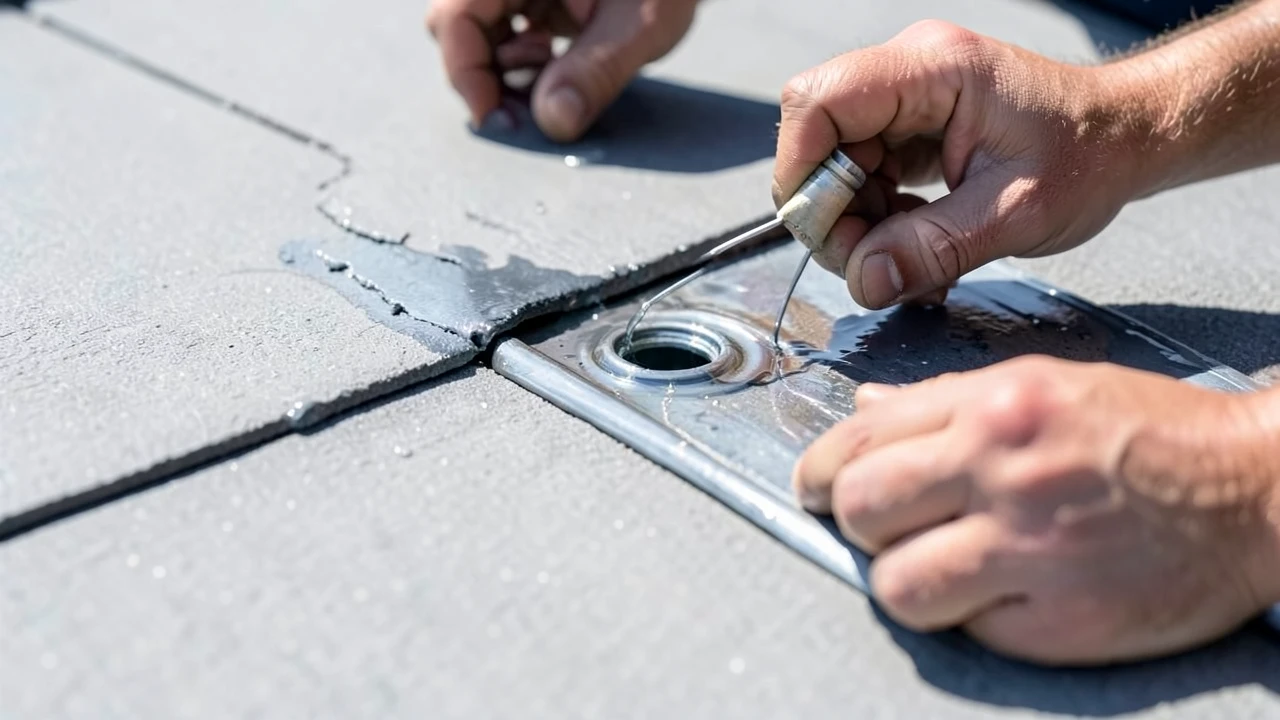
Furthermore, coatings cannot be applied simply as a blanket treatment; they must address vulnerable points-the flashing and penetrations. Think of these elements (around vents, chimneys, plumbing stacks) as the roof's little belt. If that belt has even a tiny crack or gap, water will find it. Our process involves meticulously sealing every single one of these common entry points for water damage in older Dallas homes before applying the main membrane.
When comparing options, understanding different types of liquid membranes helps you understand your choice. We might compare silicon coatings to alternatives like TPO (which is excellent for specific commercial low-slope applications) or Modified Bitumen. Knowing this allows us to recommend a sealant that perfectly matches both the aesthetic needs and the structural demands of your home. When comparing options, understanding different types of liquid membranes helps you understand your choice; for more comprehensive details on our full range of roofing solutions, you can See all services offered.
Navigating Weather Extremes in North Dallas: When Is Now the Right Time for Roofing Work?
The weather in Far North Dallas can shift dramatically, creating moments of panic after severe storms. However, reacting emotionally to an emergency is rarely the best financial decision. We need a structured approach to determining when and how roofing work should proceed.
We strongly guide homeowners to embrace the Annual Inspection Cycle. Instead of waiting until the first hailstorm or intense rain event hits-which creates immediate urgency-the smartest time to address roof health is proactively, ideally in the late fall or early spring before the major weather seasons begin. This shifts your mindset from emergency repair to preventative maintenance.
After any storm, whether it's a high wind event or severe hail, a detailed assessment is crucial. We help homeowners determine if the damage requires simple spot repairs (which might be manageable with enhanced coatings) or if the structural integrity of the entire roof system has been compromised and warrants full replacement. Our job is to provide that objective second opinion.
Ultimately, we guide clients through the "Risk vs. Cost" calculation. The cost of specialized coating application-a significant investment, yes-is minor compared to the exponentially higher expense associated with internal structural mold remediation, water damage mitigation, or dealing with years of undetected leaks. As I once told a client whose ceiling had been stained for years: "The hardest part isn't fixing the leak; it's admitting that you didn't see it coming."
We also provide seasonal scheduling tips. To ensure optimal working conditions and proper curing time, we advise avoiding major roof work during extreme heat waves or prolonged periods of intense moisture. We monitor local forecasts to schedule your project when the environment supports both safety and optimal material performance.
Protecting Your Investment: Vetting a Local Roofing Partner in Far North Dallas
When you are facing potential structural issues, choosing a contractor is perhaps the most stressful part of the process. Because the stakes are so high-we're talking about your family’s primary residence-you need more than just an appealing quote; you need a deeply integrated local partner.
The necessity of local expertise cannot be overstated. When dealing with specific building codes and material challenges unique to neighborhoods like Lake Highlands, White Rock Lake, or the historic districts, a general out-of-town contractor simply won't have the necessary knowledge base. We understand the nuances of construction in these affluent areas-the materials used decades ago, the local drainage patterns, and the aesthetic expectations that must be maintained.
Transparency in quoting is non-negotiable. To preemptively address the common homeowner objection of "hidden costs," we commit to a detailed scope of work upfront. A solid quote doesn't just paint over visible damage; it addresses structural vulnerabilities-like unseen flashing failures or compromised underlayment-and explains exactly why that prep work is necessary for the coating to succeed.
Furthermore, if storm damage is suspected, we guide homeowners through the initial steps regarding insurance coordination. We help you understand how to communicate effectively with adjusters and ensure that the repair plan not only meets current building code requirements but also satisfies both your insurer and our roofing expertise.
Finally, a professional job must include immaculate clean-up. It’s part of our commitment to treat your property like it’s our own. This means protecting landscaping, managing construction debris responsibly, and ensuring that when we walk out the door, your yard remains spotless. That level of meticulous care is simply how we operate in the community.
Need peace of mind about your roof? Call us today for a comprehensive inspection. We serve Far North Dallas at +1 469-589-3827.